Explore the world of Hanafuda with Popiplay and dive into the allure of this classic Japanese card game steeped in tradition and artistry.

Hanafuda




Discover Hanafuda: The Traditional Japanese Card Game | Popiplay
Do you remember the excitement of pulling the lever on a slot machine? The symbols spinning before your eyes, the coins dropping, and the thrill as you hoped for a win. Slot games bring out feelings of joy, excitement, and the chance for luck.
If you love slot games or are new to them, this article is for you. We will dive into the exciting world of slots. You will learn about their features and get tips to improve your game. Get ready for a fun and memorable journey!
Key Takeaways:
- Slot games evoke a sense of excitement and anticipation with their spinning reels and potential for big wins.
- Whether you’re a beginner or seasoned player, this article will guide you through the world of slot games.
- Discover the features and mechanics of slot games to maximize your gaming experience and increase your chances of winning.
- Tips and strategies will empower you to make informed decisions and optimize your gameplay.
- Unleash the thrill of slot games and embark on an unforgettable adventure filled with excitement and rewards.
The History of Hanafuda
Hanafuda’s history goes way back to the 19th century. It all started when Nintendo began making these cards. They were first used for illegal betting by the Yakuza but soon became popular.
Now, Nintendo makes special Hanafuda cards to keep this tradition alive. This shows how important Hanafuda is in Japanese culture.
Hanafuda, which means “flower cards,” is a big part of Japan’s cultural heritage. It was really popular during the Edo period. Both ordinary people and the Yakuza enjoyed playing it for fun and for betting.
Fusajiro Yamauchi saw how interesting Hanafuda was and founded Nintendo in 1889. Selling Hanafuda cards helped Nintendo grow. This marked Nintendo’s start in the gaming world.
The history of Hanafuda shows how games and culture are linked. It’s gone from a gambling tool to a deeply important part of Japan’s game scene.
People still love Hanafuda because of its mix of strategy and beauty. It’s known in Japan for its cultural value and timeless fun.
Gaming’s Cultural Heritage
Hanafuda is more than just a game. It’s a window into Japan’s natural and cultural beauty. The cards are like little art pieces, featuring flowers, animals, and symbols from seasons gone by.
Looking at these cards can make you feel nostalgic and dreamy. They remind us of Japan’s natural wonders. Hanafuda is a game but also a representation of Japan’s history and traditions.
Even with today’s high-tech games, Hanafuda remains popular. Nintendo making special editions of the cards is proof of its lasting cultural impact.
| Key Points | Hanafuda’s Impact |
|---|---|
| Cultural Significance | Representative of Japanese heritage and traditions |
| Gaming Legacy | Birth of Nintendo and its evolution in the gaming industry |
| Popular Appeal | Continued production and special editions by Nintendo |
The Hanafuda Cards
The Hanafuda deck has 12 suits, each for a month. They show beautiful plants and flowers. This makes them perfect for both playing games and looking at art. The cards turn gaming into exploring a world of nature’s beauty.
Every suit in the deck tells a story. For example, cherry blossoms and maple leaves are shown. These cards are not just for fun; they also show how Japan loves nature.
The cards have different point values. This makes the game about more than just matching pictures. Cards like “Hikarifuda” can really change your luck in the game.
People love to collect Hanafuda decks. They are not just for playing; they are works of art. All over the world, people look for these beautiful decks. You can find everything from classic designs to ones with popular characters like Pokemon.
Whether playing or collecting, Hanafuda cards bring joy. They mix games with art, sharing tradition and culture. This makes them special for all who enjoy them.
Understanding the Card Suits
Each suit in the Hanafuda deck represents a month of the year. They are decorated with different plant or flower pictures. This makes Hanafuda cards great for games and beautiful to look at.
The suits have two to three normal cards each, with low points, known as “Kasu.” These include plants and trees like cherry blossoms and pine trees, showing Japan’s seasons.
There are also cards with mid-level points. These include red and blue poetry ribbons, showcasing elegant Japanese writing. They make the game richer with culture.
At last, there are high-point special cards called “Hikarifuda.” These have amazing hanafuda drawings related to Japanese stories and myths. They make the game more interesting and strategic.
To truly understand and be good at Hanafuda, knowing about each card and suit is key. Looking at the flower cards and other illustrations helps learn about Japan’s culture. It also helps improve how you play.
The Symbolism of Hanafuda Illustrations
“The intricate illustrations on Hanafuda cards capture the beauty and essence of Japanese aesthetics, incorporating elements of nature, folklore, and artistic craftsmanship.”
Every hanafuda card illustration has a deep meaning from Japanese culture. For instance, cherry blossoms show life’s shortness, while maple leaves highlight the seasons’ beauty and change.
Animal cards, like the boar and deer, have special meanings from Japanese stories. They add interest to the game and enrich it with culture.
Japanese calligraphy and poetry are also in the deck. The poems on ribbons share classical verses. They bring out the game’s cultural side and its link to traditional Japanese art.
Learning the illustrations’ meanings gives players a better experience of the game. It connects them to Japan’s rich history and lets them enjoy the cards’ beauty and depth.
Learning the Symbols
Hanafuda cards are fascinating because of their gameplay and colorful symbols. They show birds, animals, and traditional Japanese items. These add cultural meaning and make Hanafuda more enjoyable to explore.
Many symbols on the cards are part of everyday Japanese life. For instance, the crane symbolizes long life and luck. The chrysanthemum stands for the Imperial Family, showing dignity and grace. The cherry blossom reflects life’s shortness, being central to Japan’s culture.
Studying these symbols makes the game more fun and helps you learn about Japanese. You’ll discover Japanese calligraphy and traditional symbols. This lets players understand the culture and history in each card.
Symbol Examples:
| Symbol | Meaning |
|---|---|
| Flowers: Represents the beauty of nature and the changing seasons | |
| Birds: Symbolize different characteristics and virtues | |
| Animals: Represent various qualities and traits | |
| Traditional Japanese Elements: Depict cultural symbols and historical significance |
Understanding the symbols helps learn Japanese and appreciate its culture. You enjoy the game more when you see its deep, cultural meanings. It brings you closer to Japan’s traditions and values.
How to Play Hanafuda: The Game of Koi Koi
“Koi Koi” is a fun game with Hanafuda cards. Players aim to get high points by matching cards from the table with their own. You need to think fast and take some risks to do well. Learning the rules of Koi Koi and good strategies is key to enjoying it fully.
Game Objective: Accumulate Points
In Koi Koi, you want to get as many points as you can. This happens by combining cards in certain ways and winning against others.
Gameplay Overview
Here’s how you play Koi Koi:
- Deal: Everyone gets eight cards from the deck. Four more cards are put face-up on the table.
- Match Cards: Players take turns matching their cards with those on the table. You can match by suit, month, or in special ways.
- Form Combinations: Try to create combinations like Yaku or Tsukimi from the cards.
- Capture: If you make a combination, you get to take those cards from the table. They help you get points.
- Declare Koi Koi: You can say “Koi Koi” if you think you can get more points. The game goes on until someone stops it.
- Score Calculation: After each round, count up your points. The player with the most points wins the round.
- Multiple Rounds: Keep playing over several rounds. The overall winner is the one with the most points.
Strategy and Tips
Playing smart can really help you win at Hanafuda. Here are some tips:
- Observe the Table: Watch the cards on the table to guess what combos you can make.
- Track Opponent Moves: Pay attention to what cards your opponents are taking. This can help you stop them from getting combos.
- Timing is Key: Decide carefully when to say Koi Koi for the most points. Sometime it’s better to end early if you’re already winning big.
- Learn Yaku Combinations: Knowing all the different Yaku combos is important. It helps you make better choices when matching cards.
“Koi Koi is both about luck and skill. By knowing the rules and thinking ahead, players can have a lot of fun with Hanafuda and do well in the game.”
Sample Score Calculation
| Combination | Points |
|---|---|
| Five Brights (Goko) | 10 |
| Four Brights (Shiko) | 8 |
| Rainy Four (Tsuyami Shiko) | 7 |
| Three Lights (Sanshoku) | 5 |
| Rainy Three (Tsuyami Sanshoku) | 4 |
| Five Animals (Gorowan) | 3 |
| Rainy Five(Layaruka) | 3 |
| Light (Yanagi) | 1 |
This table shows how you might score points with certain card combinations. Knowing how to get these combos and score points is crucial to doing well in Koi Koi. Have fun learning and playing!
Establishing the Parent
Before Koi Koi starts, players pick a “parent” to lead. This choice depends on the first month card drawn. The parent leads the game and can win the round if no points are scored. This step ensures everyone has a fair chance.
In the game of Hanafuda, the parent is key in setting the game’s pace. They are the first to play and make decisions that affect everyone. Their role is important in starting the game smoothly.
To set the parent, every player draws a card from a shuffled deck. The one with the earliest month card becomes the parent. This makes the selection process fair for everyone.
After choosing the parent, the game kicks off. The parent player takes the first turn. They have the chance to win the round with no points scored, making the game more strategic and fun.
The Role of the Parent Player
The parent is more than a leader; they guide everyone for a smooth game. They lead by example, influencing how the game goes and the final outcome.
They don’t just lead; they play strategically too. The parent carefully chooses their moves to increase their chance of winning. This adds a layer of strategy to the game.
“Being the parent player requires a combination of leadership, strategic thinking, and adaptability. It’s a role that carries both advantages and responsibilities, making it a unique position in Hanafuda.”
Choosing a parent at the start maintains the game’s fairness. Every player has a chance to shine and show off their skills. It’s an equal playing field for all.
This process of selecting a parent adds to the excitement. It paves the way for a thrilling and competitive game session. Everyone looks forward to it.
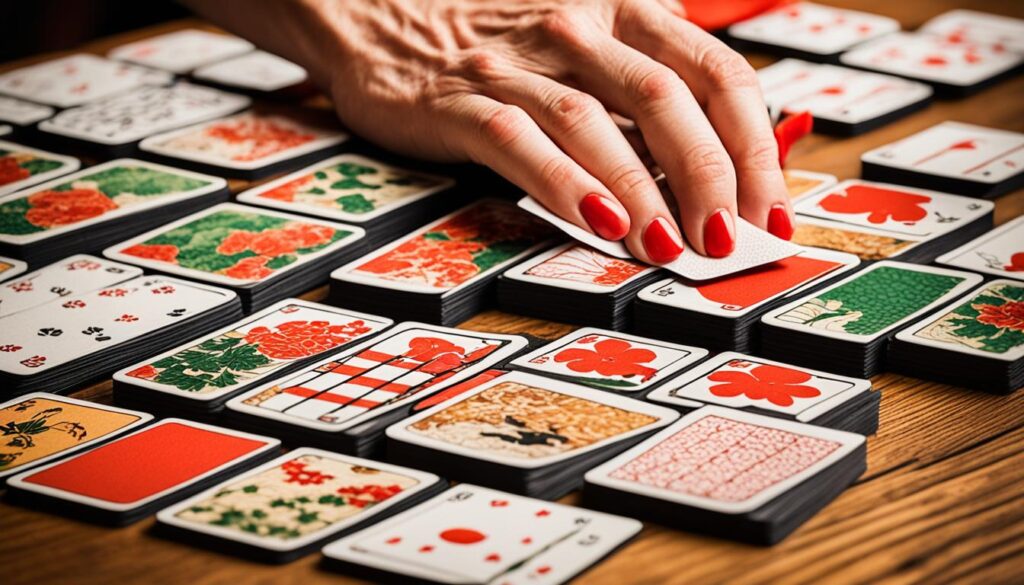
Dealing and Gameplay
At the start, the parent’s role is fixed, and then the game begins with each person getting eight cards. There are also four cards face-up on the table.
Players look for cards in their hand that match those on the table. They aim to make combos by matching, capturing, and checking for special sets. Deciding to keep playing (“koi koi”) or to stop (“shobu”) is key to enjoying Hanafuda.
Players aim to match their cards with those on the table by month or type. This is how you start making combos and score points.
Next, they try to match the card they just played with a deck card of the same type. This lets them capture more cards and earn points.
When you take cards, place them in front of you. This is a big part of getting points and doing well in the game.
In Hanafuda, “yaku” is how you score points with special card combos. Look for sets like the same month or themed cards to score.
After getting some cards and scoping out yaku, players choose to keep playing koi koi or to stop and add up points with shobu. Koi koi means they want to keep going. Shobu means they’re ready to see who wins the round. They should think carefully about their next move.
Knowing the rules of Hanafuda helps players enjoy and excel at the game. It’s all about matching, capturing carss, finding set combos, and deciding when to keep going or when to stop.
Scoring in Hanafuda
In Hanafuda, players score by getting certain card combinations called yaku. Each yaku has its own points. Knowing these combos well is key to doing well in this Japanese card game.
There are many yaku sets in Hanafuda, each worth different points. Some well-known combos are:
- Kasu is when you have many cards from the same month. The more you have, the more points you get.
- Tane needs you to get certain animal cards like Boar and Butterflies. Each animal card equals a set number of points.
- Tan is having all cards of the same month. This gets you more points than Kasu.
- Tanzaku is about getting Red and Blue Poetry Ribbons from the same month. It’s worth a lot of points.
- Inoshikacho needs you to collect Boar, Deer, and Butterfly. It’s one of the highest scoring yaku.
Players need to plan which yaku to go for to score big. This makes Hanafuda more than luck, it’s a strategic game.
The Point System:
Combination Point Value Kasu 1-10 points Tane 5 points each Tan 15 points Tanzaku 10 points Inoshikacho 20 points
These examples show different yaku and their points. Keep in mind, Hanafuda’s point system might vary in different versions. Learn the rules of your game to score right.
By understanding how to make yaku and aiming for high scores, players improve their chances of winning. Scoring makes Hanafuda more fun and competitive. Each game becomes an exciting quest to win.
Strategies and Tips for Hanafuda
Hanafuda is a game where you need to think carefully and plan. To score high and win more, you should use smart strategies and tips. Knowing the pros and cons of different card sets, playing at the right time, and guessing what your opponents will do can all help you win.
Familiarize Yourself with Card Combinations
Knowing the many card combinations in Hanafuda is crucial. Each set of cards earns you a certain number of points. Learning which ones are best can guide your choices when playing. Spend some time to get to know the various point values of the card sets.
Recognize the Power of Hikarifuda
Hikarifuda cards are super important because they give you lots of points. Look out for these key cards, as they can change the game in your favor. Using Hikarifuda in smart ways can get you more points and help you beat your rivals.
Timing Is Key
The timing of your card plays is very important in Hanafuda. Knowing the right time to play a card that matches one on the table can up your score. Being patient and picking when to make your moves can bring you more points and possibly a win.
Predict and Anticipate Opponent Moves
It’s smart to watch what your opponents do and try to guess their next steps in Hanafuda. Watching the cards they choose and the combos they make can help you figure out their game plan. This way, you can change your strategy to make it harder for them to get points.
By picking up and using these effective strategies in Hanafuda, you can enjoy the game more and maybe even win more often. These tips are useful for both new and experienced players. They are your secret weapons for scoring higher and improving your chances of winning this Japanese card game.
Adding Flavor to the Game
Make the Hanafuda game better by pairing it with tasty Japanese snacks. Try Bokksu’s Mystery Bundle or a Japanese Subscription Box. They provide both sweet and savory goodies. This mix makes playing Hanafuda more fun and engaging.
Introducing the Hanafuda Snack Collection:
| Snack | Description |
|---|---|
| Kasutera | This sponge cake is light and goes well with tea. Its gentle taste matches the feeling of the game. |
| Senbei | Senbei is a crisp rice cracker that comes in flavors like soy sauce or shrimp. Eating it brings a fun crunch to Hanafuda. |
| Mochi | Mochi is a chewy Japanese rice cake in flavors like red bean. Adding mochi to your game moments brings joy. |
| Pocky | Pocky is a biscuit stick with flavors such as chocolate or matcha. Its fun to eat, making Hanafuda lively. |
| Taiyaki | Taiyaki is a fish-shaped pastry with fillings like red bean. It brings a unique joy to the game through surprise. |
Explore Hanafuda’s world rich flavors. Enjoy this mix of traditional play and tasty snacks taking you to Japan’s heart. The Hanafuda Snack Collection makes your game moments special.
Exploring Hanafuda Collectibles
Hanafuda cards are loved by gamers and art fans alike. They offer a chance to enjoy a mix of history and beautiful artwork. These Japanese playing cards have a lot to teach us.
There are many different Hanafuda decks to collect. Each one has a special look. You can find decks full of flowers or ones with popular themes like Pokemon. This makes collecting Hanafuda a fun activity for all.
The artwork and skill in making Hanafuda cards are amazing. Even old sets are still beautiful today. The artists show their talent in every card, making them a joy to collect and see.
Special Edition Hanafuda Decks
Special edition Hanafuda decks are popular among collectors. They often mix in modern favorites like anime and video games. This adds a new, fun element to the traditional game.
These special decks turn well-known characters into art. For example, you might find Pokemon or Snoopy on a deck. They make Hanafuda even more enjoyable.
The Appeal of Vintage Sets
Vintage Hanafuda sets are full of history and beauty. They show us the art and culture of the past. Collecting these sets offers a rare chance to own a unique piece of history.
Collecting decks helps people learn more about Hanafuda. As you gather different decks, you can see how the game and its art have changed over time.
Preserving Traditions, Unleashing Artistry
Hanafuda decks blend gaming with art in a special way. Their detailed designs attract collectors worldwide. They remind us of the creativity in traditional games.
By collecting, you support the legacy of Hanafuda. You help keep alive Japan’s gaming culture for future generations. It’s a meaningful way to enjoy and honor this tradition.
Discovering Hanafuda collectibles is rewarding. It combines gaming history, culture, and art for anyone interested. Exploring these items is a great experience for fans of games, art, and Japan.
The Legacy of Hanafuda
Hanafuda is a significant game in Japan, passed down for generations. It is now a key part of the country’s gaming history. This traditional card game has special meaning and shows Japan’s culture well.
Even with today’s video games, Hanafuda remains popular. Nintendo first made Hanafuda cards before becoming famous for video games. They still make these cards today, keeping the game’s history alive.
Playing Hanafuda lets us connect with Japan’s traditions. We can see and enjoy the detailed art on the cards. This game brings people together and teaches us about Japan’s rich culture.
The Cultural Significance of Hanafuda
In Japan, Hanafuda is more than just a game. It’s a way to show the country’s cultural roots. The cards show plants, flowers, and animals, based on different times of the year.
These elements help players feel closer to nature and understand its beauty. Hanafuda is about enjoying and honoring the natural world and life’s cycles.
“Hanafuda is more than just a card game; it is a portal into Japanese culture and values.”
The Enduring Popularity of Hanafuda
Over time, Hanafuda has stayed popular with its deep strategy. Players young and old still love it. Its unique way of playing and meaning keep it interesting.
You can play Hanafuda with friends or in competitive tournaments. It promotes thinking and friendly competition. The game fits well in today’s world, too, with video game versions and new themes like Pokemon.
The Beauty of Hanafuda
Hanafuda’s beauty is in its detailed artwork and play. The cards are filled with vibrant colors and showing great skill. Artists made each card with care.
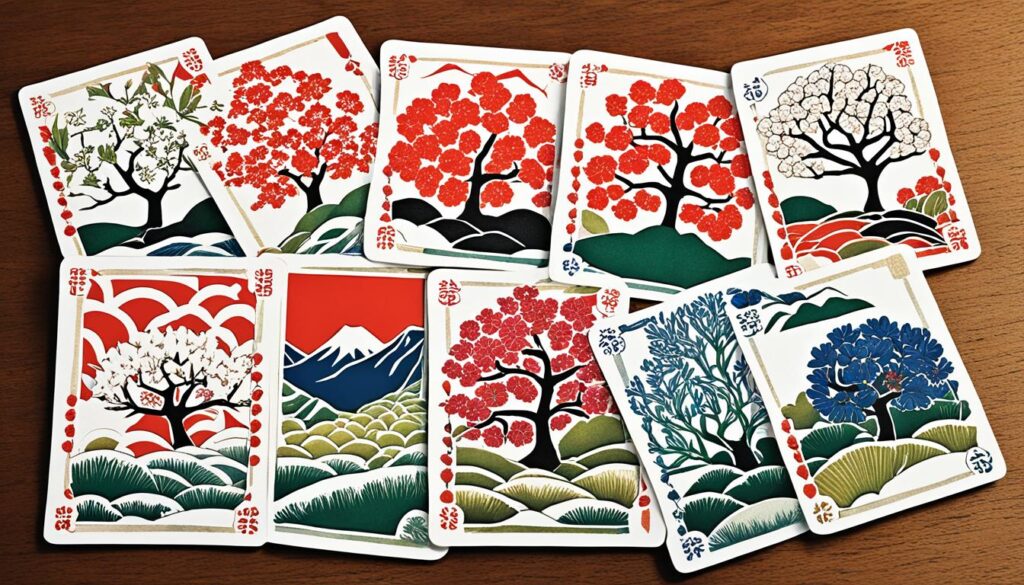
This beautiful image shows Hanafuda cards with detailed artwork. These cards are not just fun to use but also show the art of the past and present. They reflect generations of creativity.
The Timeless Appeal of Traditional Games
As society gets more modern, games like Hanafuda keep us close to our culture. They are a look into our history, showing the values and art of the past. These games remind us of our roots.
Playing Hanafuda lets us see why traditional games matter. They remind us of tradition and the joy of simple, beautiful games. They help keep our culture alive and are a source of happiness.
| Key Takeaways |
|---|
| Hanafuda holds a significant place in Japanese culture as a traditional card game, reflecting the nation’s rich heritage. |
| Nintendo’s production of Hanafuda cards showcases the game’s enduring legacy, even in the modern era of video games. |
| Hanafuda’s cultural significance, strategic gameplay, and timeless popularity make it a treasured part of Japan’s gaming heritage. |
| Exploring Hanafuda allows us to connect with Japanese tradition and appreciate the beauty of this timeless game. |
The Allure of Hanafuda
Hanafuda is known for its beautiful drawings and deep history. It brings players back to the past. This game is not just fun; it’s also a challenge. Its mix of beauty and strategic play make it stand out.
The game’s artwork is a big part of its charm. Every card shows off skillful drawings of nature and culture. The pictures are bright and interesting. They make playing the game a joy for the eyes.
Hanafuda is also a big deal in Japan. It’s been a part of their culture for a long time. Playing Hanafuda helps you feel closer to Japan’s traditions. It lets you celebrate the joy of old games.
But Hanafuda is more than looks and history. Its gameplay is clever and fun. The game is about making smart moves and watching what your opponent does. This makes each match intense and exciting.
Experience the Allure of Hanafuda
“Hanafuda takes players on a journey back in time to experience the elegance and artistry of traditional Japanese card games. Its allure lies in its ability to captivate players with its stunning illustrations, cultural significance, and strategic gameplay.” – Hiroshi Takahashi, Gaming Enthusiast
If you love old games, collecting unique items, or are curious about Japan, Hanafuda is for you. It’s a way to explore the beauty and fun of card games. Step into the world of Hanafuda and enjoy its timeless charm and thrills.
The Popiplay Experience
Popiplay is your go-to spot for diving into Hanafuda, a traditional Japanese card game. It’s all about keeping the Japanese gaming legacy alive. So, it’s a top place for anyone wanting to learn, play, or love Hanafuda.
Here, you can start a wonderful journey with Hanafuda. It’s easy to get into, whether you’re new or been playing a while. Popiplay’s platform is super friendly, letting you enjoy the game’s details and stunning looks.
Being part of Popiplay means you get lots of help to learn Hanafuda. You’ll find plenty of resources, how-tos, and tips to get you up to speed with the game. With this community, you can go from beginner to skilled player.
The Benefits of Popiplay:
- Learn: Get to grips with Hanafuda through easy-to-follow guides and interactive lessons. Popiplay helps you understand and master the game.
- Play: Enjoy smooth gameplay with Popiplay. You can face off against players worldwide or challenge the computer. It’s a great way to improve your skill and try out new tactics.
- Appreciate: Discover the beauty of Hanafuda’s cultural history with Popiplay. It shines a light on the detailed card design and meanings. Each card has a story to tell, adding to the game’s rich depth.
Discover a new side to Hanafuda with Popiplay. It’s your bridge to Japan’s deep gaming roots and the mesmerizing Hanafuda universe. Start your Hanafuda adventure today with Popiplay and delve into the magic of this timeless card game.
Conclusion
Hanafuda is a traditional card game from Japan that’s full of art, strategy, and history. Its beautiful illustrations and unique game rules draw in gamers and fans. The game uses 12 suits, each with a different flower or plant, representing a month.
Popiplay brings Hanafuda’s world to the players, mixing Japanese tradition with a classic game. It lets you dive into the game’s strategy and the beauty of its cards. Popiplay is perfect for those who love games, art, or are curious about Japan.
With Popiplay, you explore Hanafuda’s deep roots and culture. You get to enjoy the beautiful game and test your mind with strategic play. Start playing with Popiplay and find out why this game has lasted for centuries.
FAQ
What is Hanafuda?
Hanafuda is a popular Japanese card game. It has the nickname “flower cards.” The game is well-loved in Japan and reflects its cultural heritage.
What is the history of Hanafuda?
Hanafuda dates back to the 19th century. Nintendo started by making these cards for illegal gambling. They continued to produce them over the years, showing the game’s lasting appeal.
What are Hanafuda cards?
Hanafuda cards are a special kind of deck. They have 12 suits, each for a month. Each suit shows beautiful plants and flowers. People love them for their art and for playing games.
How do you play Hanafuda?
“Koi Koi” is the most common Hanafuda game. Players aim to get the most points. They match cards from the table with those in their hand. This game needs thinking and a bit of luck.
What are the symbols on Hanafuda cards?
Hanafuda cards show things like birds and traditional items. These symbols are important in Japanese life. Knowing them makes the game more fun and teaches about Japan.
How do you score in Hanafuda?
You score by getting sets of cards called yaku. Each yaku is worth points. To win, you must use the best strategy when picking your cards.
What strategies can be used in Hanafuda?
Good players know the best and worst card combinations. They time their moves and try to guess what others will do. These skills make the game more interesting.
Can snacks be incorporated into the Hanafuda gameplay experience?
Adding snacks can make playing Hanafuda even better. For example, try snacks found in Bokksu’s Mystery Bundle. They bring extra enjoyment to the table.
Are Hanafuda cards collectible items?
Collecting Hanafuda cards is a fun hobby. You can find decks with famous characters like Pokemon. There are also old sets that highlight the card’s beauty and history.
What is the legacy of Hanafuda?
Hanafuda is a treasured part of Japan’s gaming culture. It has stayed popular for many years. Nintendo’s ongoing production of Hanafuda cards shows its lasting appeal.
What is the allure of Hanafuda?
Hanafuda is spellbinding with its detailed art and deep strategy. It’s not just a game; it’s a bridge to Japan’s culture. Players get to enjoy its timeless charm.
What is the Popiplay experience?
Popiplay is for those wanting to learn and enjoy Hanafuda. It brings this classic game to new players. Through Popiplay, you connect with Japan’s rich gaming and cultural tradition.
Source Links
Top Casinos


GREAT BONUS FOR EVERY DEPOSIT UP TO 360%
Available for all players

Bonus +500% on your deposit
You will receive an additional deposit bonus to your bonus account for your first 4 deposits to your main account.
Recent News