Dive into the electrifying realm where 1.21 Gigawatts meets Rogue innovation, sparking a new wave of time travel fascination.

1.21 Gigawatts




1.21 Gigawatts: Rogue Science Unleashed
Imagine you’re in a lively casino. Everywhere, people are excitedly playing games. You decide to try your luck at slots, feeling your heart beat faster as you bet and pull the lever. The spinning reels increase your anticipation with every turn. Finally, the symbols line up perfectly, and you’ve won. It’s a moment of pure joy.
Playing slots is thrilling. It has enchanted people worldwide for many years. No matter if you’re just starting or a seasoned player, the game’s excitement is unbeatable. With different themes and bonuses, slots create a casino experience on your device.
Key Takeaways:
- Slots provide a thrilling and immersive gaming experience.
- They offer a chance to win big with exciting bonuses and jackpots.
- There are various themes and features to suit every player’s preference.
- Managing your bankroll responsibly is crucial for a successful slots experience.
- Understanding the game’s rules and paylines can increase your odds of winning.
The Science Behind 1.21 Gigawatts
In the famous movie “Back to the Future,” 1.21 Gigawatts becomes a key element. It captures everyone’s imagination with its time travel concept. But, what is 1.21 Gigawatts? How does it connect to the DeLorean, flux capacitor, Marty McFly, and Doc Brown?
1.21 Gigawatts is the power needed for the flux capacitor in the DeLorean to work. Although the flux capacitor is not real, it draws on science about electricity and power.
Marty McFly and Doc Brown find inventive ways to generate this large amount of power. They use a nuclear reactor and even lightning to achieve their goal. They show that with creativity, even a steam engine can power their time travel adventures.
“The flux capacitor, that’s what makes time travel possible.” – Doc Brown
Doc Brown’s statement highlights the importance of the flux capacitor. It makes time travel possible in the DeLorean.
While 1.21 Gigawatts may sound like science fiction, it pushes the limits of what we believe is feasible. It shows how science and creativity come together to challenge the impossible.
Power Sources in “Back to the Future”
| Power Source | Description |
|---|---|
| Nuclear Reactor | The DeLorean is originally powered by a nuclear reactor, allowing it to generate the necessary power for time travel. |
| Lightning | In the first movie, Marty and Doc plan to harness the power of a lightning strike to generate the required energy. |
| Steam Engine | In the third movie, set in the Wild West, the characters adapt a steam engine to power the DeLorean and achieve time travel. |
The table above shows the different power sources used in “Back to the Future”. It highlights the characters’ innovative thinking to reach 1.21 Gigawatts.
The story behind 1.21 Gigawatts may start in fiction, but it presents a powerful lesson. It teaches us about the creativity and determination that fuel scientific discovery.
Time Travel in Popular Culture
Time travel has long captivated audiences in books, movies, and TV shows. “Back to the Future” stands out as a beloved example. It tells the story of Marty McFly and Doc Brown, who travel through time.
These films bring time travel to life in thrilling ways. Marty and Doc use a DeLorean to jump through time. Their adventures through different eras are exciting for viewers.
The trilogy brings up the idea of challenging the rules of science. Marty and Doc explore new ways to time travel. They inspire us to think about what might be possible.
“Great Scott!” cried Doc Brown. “What we’ve found is truly unique. We’re entering a world of pure imagination and adventure.”
“Back to the Future” explores the impact of changing time. It mixes humor with the thrill of the unknown. This keeps viewers engaged and sparks their creativity about time travel.
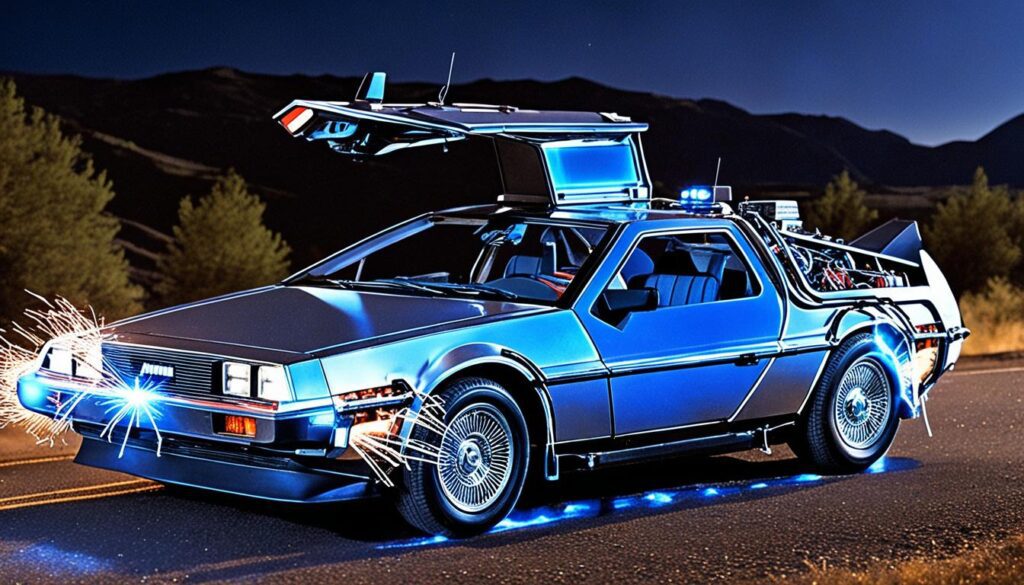
The Enduring Appeal of “Back to the Future”
The trilogy has amazed audiences since the 1980s. Its characters, adventures, and messages are still popular today. The mix of time travel and rogue science is key to its famed image.
Marty McFly and Doc Brown are now symbols of exploration and daring. They encourage us to envision what could be possible. Back to the Future drives us to think beyond time as we know it.
It invites us to jump into the DeLorean with them. So, buckle up and prepare for a time travel experience like no other.
The Role of 1.21 Gigawatts in “Back to the Future”
In “Back to the Future,” 1.21 Gigawatts is the power needed for time travel. The flux capacitor in the DeLorean time machine requires this massive power amount. Marty McFly and Doc Brown must figure out how to make this much power. They use lightning and other methods in their adventures. The search for 1.21 Gigawatts is vital to the story, pushing the characters to solve problems and meet their goals.
In the first movie, a lightning bolt is used to power the time travel. The rush to catch the bolt and send Marty to the future shows how important it is to get this giant power amount. This scene highlights the story’s thrilling challenges.
Marty and Doc keep finding new ways to get 1.21 Gigawatts. They build a nuclear reactor from scratch and use a steam train later on. Their creativity and drive shine as obstacles are tackled.
The story revolves around getting 1.21 Gigawatts, adding excitement. Overcoming power issues shows Marty and Doc’s smart problem-solving skills. It also emphasizes how crucial energy is in their time travel adventures.
Quote: “1.21 Gigawatts may seem like an impossible amount of power, but in the world of ‘Back to the Future,’ it becomes the catalyst for extraordinary adventures through time.” – Marty McFly
Image:
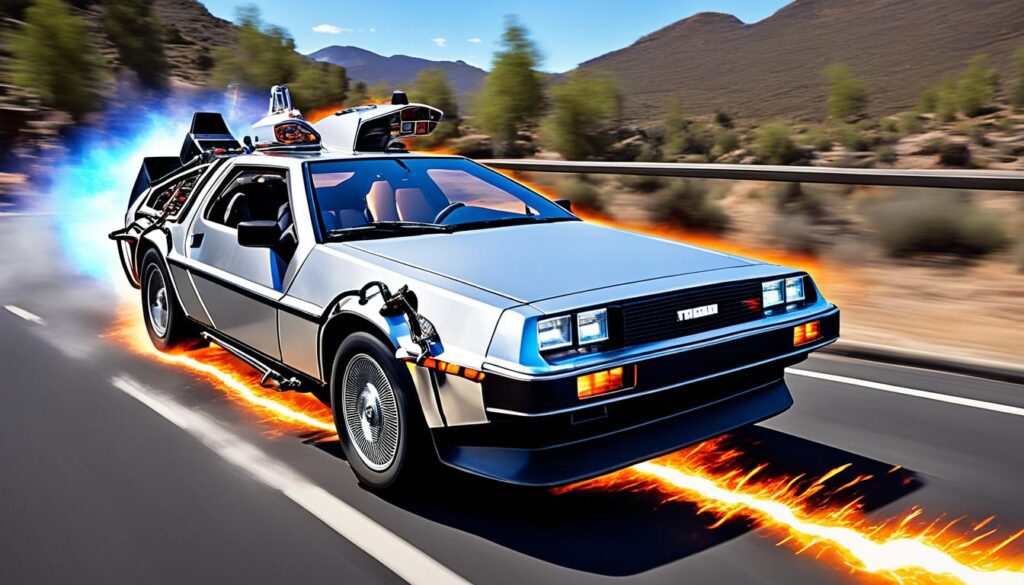
The Power of 1.21 Gigawatts
1.21 Gigawatts is an incredibly large amount of power for time travel. It’s like having 1.21 billion watts or 1.6 million horsepower. This much energy is needed to break the time barrier.
In the DeLorean, this power goes into the flux capacitor for time travel. The device creates a field that lets the car travel in time.
1.21 Gigawatts is way more than what a home uses, highlighting the DeLorean’s amazing abilities. It shows the advanced technology in the “Back to the Future” world.
The Significance of 1.21 Gigawatts
1.21 Gigawatts has become a well-known part of pop culture, loved by fans globally. It represents the innovation in science fiction.
It also sparks discussions on power use and renewable energy. It’s a symbol of how much electricity can achieve in stories and in the real world.
| 1.21 Gigawatts in “Back to the Future” | Real-world Power Equivalents |
|---|---|
| 1.21 billion watts | Approximately the power consumption of 1.5 million homes |
| 1.6 million horsepower | Equivalent to the horsepower of around 1,200 Formula 1 cars |
| Time-traveling capabilities | Exceeds current scientific understanding and technological capabilities |
1.21 Gigawatts is a made-up power for time travel but still enchants people. It reminds us of the wonder found in science fiction.
The Science of Electric Cars
Electric cars have become very popular in recent years. People see them as a green option compared to gas cars. But how do these eco-friendly vehicles work? Let’s dive into the fascinating world of electric cars and see what makes them go.
Electric cars are powered by electricity, not gas like regular cars. They don’t need “1.21 Gigawatts” like the DeLorean in “Back to the Future,” but they work on similar principles. They use electricity and store energy to run their motors.
An electric car’s heart is its rechargeable battery. This battery stores electrical energy to run the car. The stored energy changes into mechanical energy, moving the car forward as you drive.
Electric car battery technology has improved a lot. Manufacturers are making batteries more efficient. They’re also increasing how much energy they can hold. These changes are making electric cars better for daily use.
Benefits of Electric Cars
Electric cars are a top pick for those who care about the planet. Here’s why they’re great:
- Environmental Sustainability: Since electric cars don’t use gas, they don’t make air pollution. This helps fight climate change.
- Energy Efficiency: They turn more of their stored energy into power than gas cars do.
- Reduced Noise Pollution: They’re quiet, so they make less noise. This makes for a peaceful drive.
- Lower Operating Costs: Running on electricity is cheaper than gas. Plus, they need less maintenance. Electric car owners may also get perks to help with costs.
The Future of Electric Cars
The push for greener transport means more demand for electric cars. The industry is keeping up with better battery tech like solid-state batteries. These could mean faster charges, more miles between charges, and safer cars.
The future is bright for electric cars. There are more places to charge and efforts to make them more available. Worldwide, governments and carmakers are working on reducing fossil fuel use. They’re moving toward a cleaner, electric future.
Unleashing the Power of Rogue Science
Rogue science uses new and unusual ways to challenge old ideas. It opens the door to what we thought was impossible. This kind of science needs fresh ideas and a brave spirit to go into new areas.
In stories like “Back to the Future”, rogue science is clear. Characters like Marty and Doc show us using different ways can achieve big things. They push against what’s normal to travel through time. Their story shows how rogue science can change everything.
But rogue science isn’t just in stories. In real life, thinking differently can lead to big discoveries. By not always following the usual rules, scientists can find new answers and take their fields to new places.
Rogue science lets researchers try new, uncommon ways to find answers. By doing things differently, they can reach beyond what everyone thought was possible. This helps science grow in exciting new directions.
“Rogue science is not about conforming to established norms; it’s about daring to question the unquestioned and uncover the extraordinary.” – Dr. Emily Park, Renowned Physicist
Rogue science can change many fields, from physics to engineering. By thinking outside the box, scientists can find solutions that change how we look at the world. These new ideas can shape the future and improve our lives.
Yet, rogue science must be careful and follow good scientific practices. Even if scientists are exploring new paths, they must do it in a correct and ethical way. The goal is always to learn more and help science move ahead.
With rogue science, there’s a chance to make amazing discoveries. By going beyond the usual, scientists can find new truths and inspire others. They can show the world that there’s always more to discover.
| Benefits of Rogue Science | Challenges of Rogue Science |
|---|---|
| 1. Encourages innovation and outside-the-box thinking | 1. Potential for unvalidated or erroneous results |
| 2. Expands the boundaries of scientific knowledge | 2. Resistance and skepticism from the scientific community |
| 3. Drives breakthrough discoveries and advancements | 3. Ethical concerns and potential risks |
| 4. Inspires creativity and fosters interdisciplinary collaboration | 4. Funding and resource limitations |
The Legacy of 1.21 Gigawatts
1.21 Gigawatts has become a huge part of our culture, mainly because of “Back to the Future.” This classic movie trilogy showed us the amazing time-traveling adventures of Marty McFly and Doc Brown. They needed 1.21 Gigawatts of power to make their time machine work.
“Back to the Future” made the phrase “1.21 Gigawatts” famous. It stands for dreaming big and using new ideas. The movie made us all dream of what we might find if we could travel through time.
Marty (played by Michael J. Fox) and Doc Brown (played by Christopher Lloyd) are now cultural heroes. They showed us the fun side of science and time travel. Their partnership and the story brought the concept of 1.21 Gigawatts to life, making it unforgettable.
“Great Scott! 1.21 Gigawatts? We’re really throwing ourselves into the deep end of rogue science here.” – Doc Brown
“1.21 Gigawatts” has spread to many parts of our media and culture. It’s in TV, music, and books, showing its lasting influence. Whether serious or fun, these mentions keep the magic of time travel and the “Back to the Future” movies alive in our minds.
“Back to the Future” has a timeless impact. It inspired so many, showing the magic of storytelling and the endless chances in science fiction. Even today, it encourages us to keep dreaming big.
Conclusion
The idea of 1.21 Gigawatts and rogue science has grabbed people’s attention. We’ve seen this in the “Back to the Future” movies. These stories show us how science can break the rules and find new limits. They mix dreams with creative discoveries to open up amazing new doors.
1.21 Gigawatts is a huge amount of power. It’s now known as a key symbol of time travel and top-notch tech. It makes us wonder about the secrets of the universe. The use of rogue science adds a special touch. It points out that science doesn’t always follow the usual path. It means trying new ideas and ways to find unusual discoveries.
Exploring the idea of 1.21 Gigawatts takes us on a thrilling journey. This journey is full of excitement about where rogue science and time travel can lead. By stepping into this world, we shake things up. We make new insights into the universe and prepare for big steps in science and tech.
FAQ
What is 1.21 Gigawatts?
1.21 Gigawatts is the power needed for the flux capacitor in the DeLorean.
What is the flux capacitor?
The flux capacitor is a make-believe part that lets the DeLorean time machine move in time.
How is 1.21 Gigawatts related to “Back to the Future”?
In “Back to the Future,” Marty McFly and Doc Brown work to get 1.21 Gigawatts for time travel.
Are electric cars powered by 1.21 Gigawatts?
No, they’re not. Electric cars use batteries for power. This idea is just for the DeLorean in “Back to the Future.”
What is rogue science?
Rogue science is about using new or unusual ways in science. It questions old ideas.
How has 1.21 Gigawatts become a cultural icon?
1.21 Gigawatts is a famous phrase due to its role in the “Back to the Future” movies.
Can rogue science lead to scientific breakthroughs?
Yes, rogue science can bring new methods and ideas. It might find new discoveries.
What is the significance of 1.21 Gigawatts in “Back to the Future”?
It is the energy needed for time travel. This makes it key in the story.
How do electric cars operate?
They work with batteries that power an electric motor. It’s a clean way to move.
Why is time travel popular in popular culture?
Time travel lets us think about the past and future. It’s exciting and fun for stories.
Source Links
- https://www.syfy.com/syfy-wire/understanding-perfect-harmony-the-science-behind-trolls-band-together
- http://bbs.stardestroyer.net/viewtopic.php?t=155323
- https://www.nbcnewyork.com/news/national-international/x-men__days_of_future_past_trailer_is_here-in_the_present_/1989188/
Exploring 1.21 Gigawatts; Rogue Innovations Unleashed
In a world full of endless dreams, *Back to the Future* made us imagine time travel and *energy technology*. The idea of 1.21 gigawatts, once seen as just a number for the DeLorean, now touches our hearts. It makes us dream of changing the past or creating a brighter future. This article looks at how these ideas blend with today’s tech, making us think about the future and our past.
Rogue thinkers push the limits, bringing us new discoveries in science and tech. They turn dreams into reality, inspiring others to innovate. We’ll see how these ideas affect our lives, from movies to our daily tech.
This article will dive into the science behind 1.21 gigawatts and rogue innovations. It will also look at how these ideas make us feel, connecting us to the magic of *time travel*. By exploring these themes, we can feel the wonder that links the past and future.
For those curious about time travel and innovation, there’s a lot to learn. We invite you to think about your own adventures in energy and tech. Sometimes, the most amazing things come from the least expected places.
Stay updated and informed about these exciting topics. Check out the complete privacy policy to see how your actions help shape these discussions.
Key Takeaways
- The concept of 1.21 gigawatts is key in discussing *energy technology* and its future impact.
- Rogue innovations often start with those who think outside the box, leading to breakthroughs in areas like time travel.
- *Back to the Future* reminds us of the mix between nostalgia and innovation.
- Understanding the emotional side of these ideas enriches our experience in movies and real life.
- Looking at rogue thinkers motivates the next wave of innovators.
The Concept of 1.21 Gigawatts
The term 1.21 Gigawatts means a huge amount of electrical power, equal to one billion two hundred ten million watts. It’s key in talks about energy standards and how much power we use. It became famous thanks to the movie “Back to the Future,” where it was needed for time travel.
Gigawatts show how much power we need to make energy for everyone. They help us talk about different power sources, like solar or coal. As we move to cleaner energy, having strong energy standards is vital. They help us see how well we’re doing and what new ideas we can use.
Using 1.21 Gigawatts in real life shows the big challenges we face in getting this much energy. We need new tech for batteries, managing power grids, and finding better power sources. These efforts help us talk about what makes good energy standards in our changing world.
Understanding Time Travel in Popular Culture
Time travel is a big theme in popular culture, catching the eye of many as it looks at the past, present, and future. It has grown a lot in media, like books and movies. Famous stories show different views, letting us see the endless possibilities of science fiction.
Stories about time travel often let characters face different worlds or fix past errors. These stories make us think about big questions like destiny, choice, and time. Movies like “Back to the Future” are fun but also make us think about the science behind time travel.
From H.G. Wells to today’s movies, stories about time travel tell us a lot about what we hope for and worry about. This shows how big a part of popular culture it is. Exploring time travel helps us understand human life and the science of what might come next.
The Significance of Rogue Innovations
Rogue innovations are key to changing industries and driving progress. They bring new ideas that challenge old ways, leading to big changes in many areas. By going against the norm, these innovations open up new ways of thinking and solving problems.
Take virtual reality, for example. It changed entertainment and education by offering immersive experiences. In the energy sector, solar panel technology has changed how we make and use energy.
Rogue innovations show a spirit of adventure and not following the crowd. They match the themes of “Back to the Future,” where new ways lead to big breakthroughs. By adopting these technologies, societies get more efficient and sustainable. This leads to more exploration and creativity.
| Rogue Innovation | Industry Impact | Examples |
|---|---|---|
| Virtual Reality | Entertainment, Education | Oculus Rift, Google Cardboard |
| Solar Technology | Energy | Thin-film solar cells, bifacial solar panels |
| Blockchain | Finance, Supply Chain | Bitcoin, Ethereum |
Rogue innovations change what we think is possible. They open doors to improvements that help both the economy and society. By welcoming these new technologies, we create a space for creativity to thrive. This leads to a better future for everyone.
Back to the Future: A Cultural Phenomenon
“Back to the Future” has been a big hit since 1985. It mixed science fiction with real-life stories, changing how we see time travel. People loved the cool tech and stories from this movie, making it a classic.
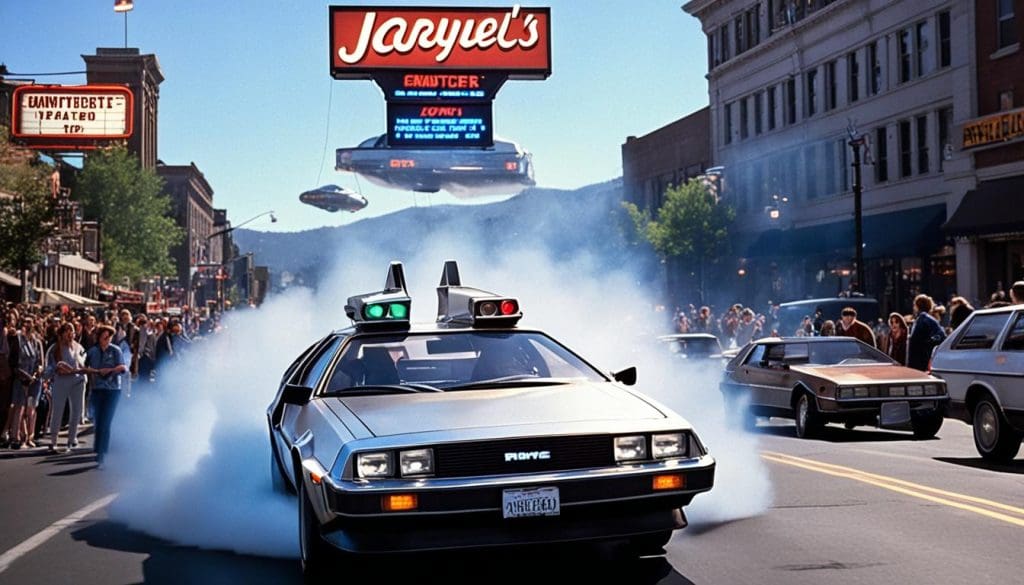
The Legacy of Doc Brown
Christopher Lloyd played Doc Brown, a quirky inventor. He made a big mark on pop culture. Through him, the movie talks about complex science, like time travel.
This movie sparked interest in science and creativity. Doc Brown shows how dreams and knowledge can lead to new ideas. He mixes fun with deep thoughts, showing how movies can spark talks on science and tech.
- The portrayal of Doc Brown promotes curiosity about science and technology.
- His character exemplifies the fusion of humor with complex themes.
- The film inspired a generation to think critically about the implications of innovation.
“Back to the Future” still touches hearts and minds today. It’s a symbol of what we hope and worry about the future. It’s a key part of its lasting impact.
Flux Capacitor: The Heart of Time Travel
The flux capacitor is a key innovation in time travel, especially in the “Back to the Future” movies. It’s the main part that makes the time machine work. This device lets people travel through time. When the DeLorean hits 88 miles per hour, the flux capacitor kicks in, sparking interest among fans and scientists alike.
The flux capacitor has a special design and ideas behind it. It looks like a bunch of lights and a box, working on time and space. This sparks questions about if such tech could really work in real life. Even though the time machine is just for movies, it makes us think about what advanced tech could do in our world.
The DeLorean makes the time travel idea even more exciting. Its cool look and special features grab fans’ attention. Together with the flux capacitor and time machine, the DeLorean shows how stories and tech can mix in a big way. This mix has shaped pop culture and sparked talks on time travel.
| Element | Function | Significance |
|---|---|---|
| Flux Capacitor | Enables time travel | Core element in the narrative |
| DeLorean | Serves as the time machine vehicle | Iconic representation of 80s culture |
| 88 mph Speed | Activates the flux capacitor | Critical plot point for time travel |
Marty McFly’s Adventure through Time
Marty McFly is the heart of adventure in “Back to the Future.” He goes on a journey filled with excitement and the challenges of time travel. His trips through different times show the thrill of his adventures and the big effects of changing the past.
The story explores the tough choices Marty faces as he moves through time. These choices affect his life and those close to him. It’s a deep look into the moral and ethical sides of time travel.
The DeLorean: More than Just a Car
The DeLorean is more than a car in the series; it’s a mix of innovation and adventure. It makes time travel exciting and real for viewers. This iconic car, with its flux capacitor, symbolizes a generation’s love for the future.
Its sleek look and special features make time travel more appealing. The DeLorean has become a cultural icon. It shows how new ideas can spark creativity and inspire many.
Marty McFly’s journey through time brings together nostalgia and adventure. It makes us think about our choices in life and time travel. This mix touches people across generations.
| Attribute | Marty McFly | DeLorean |
|---|---|---|
| Role in Story | Protagonist navigating timelines | Time machine facilitating adventures |
| Moral Dilemmas | Consequences of altering past | Represents the unpredictability of time |
| Cultural Impact | Symbol of youthful ambition | Icon of the 80s and innovation |
| Adventure Elements | Time-traveling encounters | Innovative technology |
Gigawatts; Rogue Innovations in Energy Technology
The idea of 1.21 Gigawatts has moved beyond just movies and TV shows. It now marks a key point in the growth of renewable energy. With more people on Earth, finding new ways to make and use energy is more critical than ever.
New ideas in energy tech aim to meet these needs, breaking new ground in renewables. Solar panels and wind turbines are changing how we get and use energy. These changes help countries work towards making lots of power, like 1.21 Gigawatts.
Using these new energy systems cuts down on fossil fuel use. This helps fight climate change. Moving to these new solutions makes energy use more efficient and keeps the power flowing. As more people see the value in energy tech, the future looks promising for a greener world.
| Energy Source | Energy Output (Gigawatts) | Renewability |
|---|---|---|
| Solar | 1.21 | Yes |
| Wind | 3.0 | Yes |
| Hydropower | 2.5 | Yes |
| Nuclear | 1.5 | No |
| Natural Gas | 2.0 | No |
80s Nostalgia and Its Impact on Modern Innovations
The 1980s have a big impact on today’s design. They inspire a wave of 80s nostalgia in many areas. People look back fondly at the past, leading to a trend in retro-futurism.
Retro-futurism combines the old charm of the 80s with new ideas. It brings together past visions of the future with today’s technology. This mix creates new designs and tech that tell us something about our culture.
The Rise of Retro-Futurism
Retro-futurism blends the 80s’ nostalgic feel with futuristic ideas. It leads to new designs and tech that make us think. This movement is interesting because it mixes old dreams with new tech.
Here are some ways retro-futurism affects today’s innovations:
- Fashion: Adidas and Nike often release collections inspired by 80s styles but with a modern twist.
- Architecture: Buildings with 80s-style shapes, neon colors, and materials are becoming popular in cities.
- Consumer Electronics: Tech companies design products that look retro but have the latest features.
These examples show how 80s nostalgia affects not just looks but feelings too. It connects us to the culture of our youth. This nostalgia leads to new innovations that feel familiar yet push the limits in design and tech.
The Role of Rogue Thinkers in Scientific Advancements
Rogue thinkers are key to innovation and scientific breakthroughs. They challenge old ideas and go beyond what’s known. This leads to new ideas and technologies. Many have shown how this approach can change fields.
Think of Nikola Tesla and Albert Einstein. Tesla changed electrical engineering with his ideas on wireless energy. Einstein’s theories changed how we see time and space. They show how rogue thinkers can lead to big changes, like in “Back to the Future.”
The path to innovation is full of risks. Those who dare to be different stand out. They have certain traits:
- A willingness to challenge the usual ways
- A deep curiosity about the world
- The skill to link different ideas
- A drive to chase ideas others think are impossible
These qualities show why we should support rogue thinkers. Creating spaces for creativity and trying new things can lead to big scientific breakthroughs. These can change lives and industries.
Challenges Faced by Innovators in Time Travel Technologies
The quest to create time travel technologies is full of obstacles. One big challenge is making it work with our current understanding of physics. This limits what we can do, making it hard to move forward.
Many people think time travel is just for movies. This doubt can stop funding and support for research. Innovators need people to believe in them to make progress.
There are also big ethical questions. Changing the past could have huge effects. These issues make it hard to work on time travel because of the big responsibilities it brings.
In summary, those working on time travel face many challenges. Overcoming these hurdles is key to making time travel a reality.
Exploring the Physics Behind Time Travel
Time travel fascinates both scientists and fans, mixing Physics with endless possibilities. Over time, many theories of time travel have come up. These theories make us wonder about what’s beyond our current understanding of time.
Physicists look at ideas like wormholes and time dilation. They think about how we might travel through time. These ideas make us think about going back in time and into the future.
Theories and Speculations from Experts
Wormholes are a big topic in time travel theories. They suggest we could take shortcuts through space-time to travel through time. If these tunnels exist, they could link different times and places.
Time dilation is another key idea. It says that time moves slower for people moving fast compared to those standing still. This idea makes us think about traveling to the future by moving really fast.
Experts like Kip Thorne and Stephen Hawking have added a lot to the discussion. They explore how gravity and speed affect time. Their work helps us understand the limits and possibilities of time travel.
The mix of real Physics and stories sparks a deep interest in time travel theories. Every new discovery challenges our old ideas and makes us curious about what’s next.
The Intersection of Fiction and Reality in Time Travel
The relationship between fiction and reality is always changing, especially with time travel. Movies like “Back to the Future” shape how we think about future tech. They inspire real innovation and make us wonder about time travel’s possibilities.
Stories about time travel spark our imagination and make us think about today’s science. They show us what could be possible, making us question what we can really do. By exploring time, creators push scientists to think outside the box.
Some stories make us wonder what would happen if we changed the past. This sparks research into physics theories and new ideas. As scientists dig deeper, the gap between fiction and reality gets smaller.
- Fictional narratives can ignite interest in scientific pursuits.
- Technological portrayal in films often speculates on real advancements.
- Creative works encourage discourse on ethics in science and technology.
This mix of fiction and reality does more than entertain. It pushes researchers to find new ways to tackle time travel challenges. Thought-provoking stories show how storytelling can spark real scientific discussions.
| Aspect | Fiction | Reality |
|---|---|---|
| Technological Possibilities | Limitless imagination | Bound by current science |
| Narrative Influence | Inspires further exploration | Shapes research agendas |
| Public Perception | Exciting future scenarios | Grounded in empirical evidence |
Future Implications of Harnessing 1.21 Gigawatts
Using 1.21 gigawatts of energy marks a big change in energy tech. This amount of power could lead to new ways to solve energy problems. It could change things in fields like farming and transport.
This big energy could help make clean energy systems better. Adding 1.21 gigawatts to renewable energy could power whole cities. It would cut down on the need for fossil fuels. This would push for better solar, wind, and hydroelectric tech.
Handling such a large amount of energy means we need better ways to store it. New battery tech and ways to share energy are key. These are exciting areas for innovation.
“Innovation is the engine that drives us toward an energy-efficient future,” expressed a leading expert in energy technology.
Using this energy makes us rethink how we do things in engineering. Industries need to find ways to use 1.21 gigawatts well. This means always improving and working together across different fields.
As we keep researching and solving problems, we’ll see changes in many areas. This could lead to a healthier planet and growing economies.
Conclusion
Time travel and rogue innovations deeply connect with our cultural history. Stories like “Back to the Future” show how tales can spark new tech. These stories spark our imagination, leading to new discoveries and inventions.
Now, we’re on the edge of big changes in energy. The idea of using 1.21 gigawatts is more important than ever. New energy tech shows us a future where amazing ideas from stories might become real.
This mix of creativity and science is key to our future. It shows how thinking outside the box is crucial. By linking culture with tech, we can tackle big challenges and find new ways to use energy sustainably. This keeps the spirit of imagination alive.
FAQ
What is the significance of 1.21 gigawatts in energy technology?
1.21 gigawatts is a big unit of power that became famous thanks to the movie “Back to the Future.” It shows how much energy is needed for time travel in the story. This highlights the need for big energy sources in science stories.
How has “Back to the Future” influenced public perceptions of time travel?
“Back to the Future” made people really interested in time travel by telling fun stories. It introduced the flux capacitor and talked about the good and bad of changing the past. This made time travel seem real and exciting.
What are rogue innovations, and how do they relate to technological advancement?
Rogue innovations are new ideas that challenge old ways and bring new changes. They inspire new tech and ideas, just like in “Back to the Future.” This shows how new ideas can change energy and science.
What role does nostalgia for the 1980s play in modern innovations?
People’s love for the 1980s brings back old ideas of the future, influencing today’s tech and design. This nostalgia affects how people buy things and inspires new ideas that mix old styles with new tech.
How do theoretical physicists view time travel?
Physicists think about time travel a lot, looking at things like wormholes and time dilation. They explore how time travel might work and its limits. This helps both science and movies talk about time travel.
What challenges do innovators face in developing time travel technologies?
Making time travel tech is hard because of tech issues, getting people to accept it, and thinking about ethics. These problems show how hard it is to make cool movie ideas real.
How has “Back to the Future” influenced scientific inquiries and advancements?
“Back to the Future” makes people curious about energy and time travel. It gets people talking about physics and pushes scientists to think big. This movie makes us wonder what’s possible.
What future innovations could arise from harnessing immense energy sources like 1.21 gigawatts?
Using huge energy like 1.21 gigawatts could lead to big changes in engineering and the environment. These changes could be key to making energy use better and helping the planet. They could change how we think about energy.
Source Links
Top Casinos


GREAT BONUS FOR EVERY DEPOSIT UP TO 360%
Available for all players

Bonus +500% on your deposit
You will receive an additional deposit bonus to your bonus account for your first 4 deposits to your main account.
Recent News